
A person looking for a criminal defense lawyer usually has to choose someone they have never met, often within a day or two of an arrest. Before they read a word about your experience, they see your face: in the Google map listing, at the top of your bio page, next to your profile on a legal directory. That photo, and the way you present yourself across your website and profiles, is the first evidence they get about what kind of lawyer you are.
This guide covers the visual side of an attorney’s personal brand. It looks at headshots, what to wear for photos and video, how to keep your image consistent across the web, and the advertising rules that apply to all of it. It is written for defense lawyers who want their public image to match how they actually practice.
What this guide covers
- Why image carries extra weight in criminal defense
- Planning a headshot that works at phone size
- Clothing for photos and video
- Team and office photos for your site and Google profile
- Stock photos, actors and AI images
- Keeping one consistent image across every profile
Why image matters more in criminal defense
People hiring a defense lawyer are frightened and deciding fast. They can’t judge your motion practice or your trial record from a search result. What they can judge is whether you look like someone who would be taken seriously in a courtroom, and whether you seem approachable enough to call at ten at night.
Those two impressions pull in different directions. A defense lawyer has to look serious enough to stand up to a prosecutor, and human enough that a scared nineteen-year-old or the mother of someone in custody feels able to pick up the phone. A stern portrait in front of a wall of law books handles the first and often fails the second.
Referred clients look you up too. If the photo they find is ten years old, blurry or cropped from a wedding, it plants doubt at the moment the referral should be turning into a call.
What a good defense attorney headshot looks like
A good headshot is current, well lit, and looks like you on an ordinary day in court. These points hold up across most practices:
- It is recent. If your hair, glasses or weight have changed noticeably, retake it. A client who meets someone different from the photo starts the relationship slightly off balance.
- The camera sits at eye level and you look straight into the lens.
- Light on the face is soft and even. Hard shadows read as severe.
- The expression is natural. A relaxed, attentive look or a small closed-mouth smile usually suits defense work better than a big grin or a frown.
- The background is plain or softly blurred. Flags, bookshelves and busy offices turn into clutter at small sizes.
- The frame runs from mid-chest up with room around the head, so it can be cropped square for Google and into a circle for social profiles.
Most of the time your photo is seen as a thumbnail on a phone, next to a star rating. Before you pick a final shot, shrink it to postage-stamp size and check that your face still reads clearly.
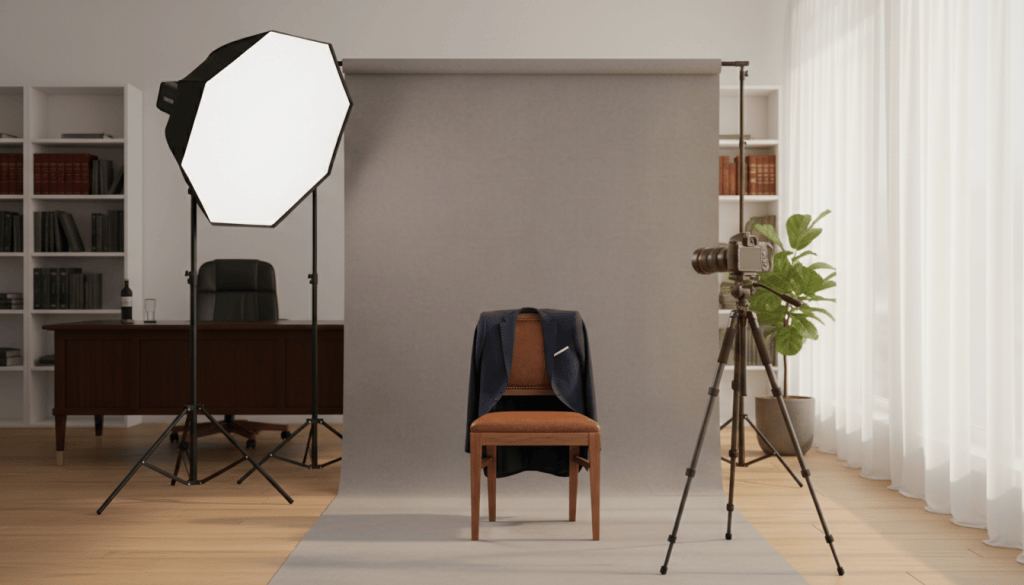
Hire a photographer who does corporate or editorial portraits, and ask for a few versions: a tight headshot, a wider shot that shows your shoulders and jacket, and a few in a real setting such as by a window in your office. Courthouses often restrict photography inside the building, so ask the court first or shoot outside if you want the courthouse in the picture.
Clothing for photos and video
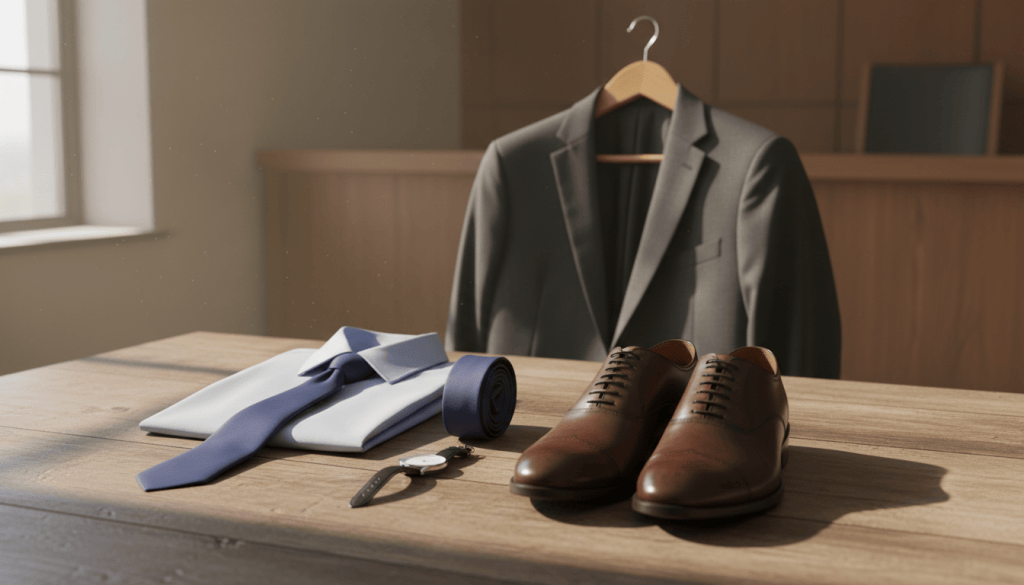
Wear what you would wear to court on a day you need the judge to take you seriously. For most defense lawyers that means a well-fitted suit in navy, charcoal or gray, with a plain or lightly patterned shirt or blouse. Fit matters more on camera than price. Shoulders that hang past your own and collars that gap are obvious in a close crop.
Some practical points that photographers commonly give:
- Skip tight stripes, small checks and herringbone. They can shimmer on screens, an effect called moire.
- Solid mid-tone colors photograph most reliably. Bright white can lose detail and black can disappear into shadow.
- Keep jewelry, ties and accessories simple so your face stays the focus.
- Bring two or three outfits and decide after seeing them on the photographer’s screen.
- For video, wear a jacket or collared shirt so a lapel microphone has somewhere to clip.
How formal should you be? Some defense lawyers like a second, less formal photo with an open collar or no jacket for social media or a “meet the attorney” section. That can sit well beside a formal headshot, as long as the formal one is the image on your Google profile and bio page. A federal white-collar practice and a rural misdemeanor practice may reasonably settle on different levels of formality. Dress the way your clients expect their lawyer to look in front of their judge.
Personal branding beyond the headshot
Personal branding for a lawyer is the overall picture people form from everything public about you: your photo, your bio, how you write, the topics you talk about, the way you answer reviews and the videos you post. The visuals carry a lot of it, but they need to agree with the words.
Here are some common places where they disagree:
- A bio that calls you “aggressive” next to a soft, smiling photo in a sweater. Either could work. The mismatch is what reads as odd.
- A website logo and color scheme that differ from what appears on the Google profile and social pages.
- A homepage photo of someone in a courtroom who is clearly not the lawyer named on the bio page.
Your bio should say which courts you appear in, how long you have practiced criminal law, and whether you worked as a prosecutor or public defender before. Those details help clients decide, and they also help Google and AI assistants understand who you are. Google’s guidance on helpful content encourages pages to make clear who created them, through bylines and author information where readers would expect it.
Team and office photos
Clients hire a firm as well as a lawyer. If a paralegal or associate will be answering calls and handling scheduling, put their photo and first name on the site. A frightened caller who recognizes the name of the person who picks up tends to settle faster.
Google’s Business Profile help pages suggest adding team photos alongside interior and exterior shots. They also say an image “should represent reality,” without heavy filters or AI alterations. For a defense firm, useful profile photos include the building entrance so people can find you, the reception area, the room where consultations happen, and each attorney. People coming to a first meeting are anxious, and seeing the door before they arrive helps.

Stock photos, actors and AI images
Stock images of gavels, scales and handcuffs appear on a huge number of defense websites. They break no rules, but they say nothing about you either. A bigger problem is a stock photo of a model in a suit placed where readers will assume it is the attorney.
That can become an ethics issue. ABA Model Rule 7.1 prohibits false or misleading communications about a lawyer’s services, and states add their own detail. Florida’s Rule 4-7.13, for example, treats as deceptive an image that gives the false impression the person shown is the advertising lawyer, unless a clear disclaimer says otherwise. The same rule requires disclaimers for dramatizations a reasonable viewer would not recognize as staged and for actors portrayed as professionals. Other states have their own versions, so check your state bar’s advertising rules before you use stock people, actors or AI-generated faces on your site, in ads or in video.
The safe approach is to use real photos of the real people at your firm and keep stock images for scenes that are obviously decorative.
Keeping one consistent image across the web
Clients and search engines both look you up in several places. Use the same current headshot, the same version of your name and the same firm name on your website bio, your Google Business Profile, LinkedIn, legal directories such as Avvo, Justia and Martindale-Hubbell, and any social accounts.
That consistency has practical value. When a person sees the same face on the map listing, the directory and the website, they know they have found the right lawyer. When Google or an AI assistant pulls together information about you, matching names and details make it easier to connect those sources to one person.
Keep a list of every place your photo appears, and update them all on the same day when you get new headshots.
Video follows the same rules
Short videos, such as two minutes on what happens after a DUI arrest in your county, let clients hear your voice before they call. The clothing advice above applies, and a few points matter more on video. Sound quality counts for more than camera quality, so use a lapel microphone. Record in a quiet room with soft light from in front of you. Look at the lens and speak as you would to a client across a desk. Keep the background real, which usually means your own office rather than a green screen.
If a video uses an actor or re-creates an event, read your state’s rules on disclaimers before you publish it.
Checking whether it helps
You can watch what changes after you update photos and bios. In your Google Business Profile performance report, compare calls, website clicks and direction requests for the months before and after. In your website analytics, check whether people who view attorney bio pages go on to contact the firm. Ask new clients how they found you and what made them call. Their answers, in their own words, are often the most useful information you will get.
Questions defense attorneys ask about headshots and branding
How often should I update my headshot?
Whenever you look noticeably different, and otherwise every two or three years as a rough rule.
Can I use one photo for everything?
Use one main headshot everywhere so people recognize you from profile to profile. Add a few secondary photos, such as you at your desk or with your team, for your website and social pages.
Should I smile in my headshot?
A relaxed, natural expression usually works best for defense work. Try several expressions during the shoot and choose with help from someone honest, such as a colleague or staff member, since most people are poor judges of their own photos.
Is it fine to use AI to create or retouch my headshot?
Light retouching, such as fixing color or a stray hair, is normal. A fully AI-generated portrait, or one that changes how you look, is a bad idea. Clients will meet the real you, Google asks for images that represent reality, and a misleading image could raise problems under your state’s advertising rules.
This guide is part of SBD Marketing’s series on criminal defense marketing. SBD Marketing works only with criminal defense law firms, building their websites and helping them get found in Google and AI search.
SBD Marketing · info@sbdmarketing.agency · Book a call: sbdmarketing.agency/scheduling · Serving criminal defense law firms across the USA · sbdmarketing.agency


Leave a Reply